
Introduction
Plum tomatoes are among the most versatile and essential ingredients in kitchens worldwide. Known for their firm flesh, low water content, and intense flavor, they are particularly valued for sauces, pastes, and cooked dishes. Unlike round tomatoes that are often juicy and best eaten raw, plum tomatoes are meaty and hold up well during long cooking processes. Their unique characteristics make them a favorite of chefs and home cooks alike, from rustic Italian kitchens to modern culinary labs.
Beyond their practicality, plum tomatoes also carry a rich history and cultural significance. They are more than just a fruit; they are a symbol of tradition, craftsmanship, and the enduring love for fresh, flavorful ingredients. This article delves into every aspect of plum tomatoes — their origins, types, cultivation, culinary uses, nutritional value, and global impact — providing a complete understanding of why this tomato is indispensable in both cooking and culture.
Origins and Historical Significance
Plum tomatoes, like all tomato varieties, trace their ancestry to the Americas. Originally cultivated in regions of South and Central America, tomatoes were introduced to Europe in the 16th century, where they were first embraced as ornamental plants before becoming integral to Mediterranean cuisine. Plum tomatoes emerged through selective breeding aimed at producing fruit that was meaty, durable, and ideal for cooking.
In Italy, particular attention was given to developing long, slender tomatoes suitable for sauces and canning. The renowned San Marzano variety, grown in the volcanic soils near Naples, became synonymous with culinary excellence. Its balance of sweetness, acidity, and firm flesh set the standard for plum tomatoes worldwide. In the United States and other tomato-growing regions, cultivars such as Roma were developed to replicate these qualities, providing cooks with consistent, flavorful fruit for both fresh and preserved dishes.
Historically, plum tomatoes have not only served as a practical ingredient but also as a cultural emblem. In Italian households, a tomato sauce made from ripe plum tomatoes represents more than nourishment; it reflects heritage, family tradition, and the artistry of cooking with care and intention.
Physical Characteristics
Plum tomatoes are easily distinguishable from other varieties due to their elongated shape, thicker walls, and lower water content. While round tomatoes have multiple seed cavities filled with gel, plum tomatoes usually have two to three locules, resulting in a denser and fleshier fruit. This structure makes them ideal for cooking, as they retain texture and flavor when heated or reduced into sauces.
The skin of plum tomatoes is typically smooth and thin, yet robust enough to withstand cooking without splitting excessively. Their color ranges from deep red to bright crimson, signaling ripeness and intense flavor. When cooked, plum tomatoes release concentrated taste without diluting dishes with excess liquid. Their firm flesh also allows them to be diced, roasted, or sliced without losing integrity, making them indispensable in both professional kitchens and home cooking.
Varieties of Plum Tomatoes
Plum tomatoes come in a range of varieties, each offering unique characteristics suited to specific culinary applications.
The Roma tomato is the most common and widely available variety. It is cylindrical, slightly pointed at the end, and prized for its mild yet balanced flavor. Roma tomatoes are often used for sauces, canning, and purees, and they are especially popular in American kitchens due to their availability and consistent quality.
San Marzano tomatoes are celebrated for their exceptional sweetness and low acidity. They are slender, bright red, and elongated, and their cultivation is regulated in Italy to ensure authenticity. San Marzano tomatoes are the traditional choice for authentic Italian pasta sauces and pizzas.
Heirloom varieties such as Amish Paste and Opalka offer distinct flavors and larger fruit sizes, making them excellent for both fresh consumption and slow-cooked preparations. Other regional cultivars provide growers and chefs with options tailored to climate, soil, and culinary preference, reflecting the adaptability and global appreciation of plum tomatoes.
Cultivation and Growing Conditions
Growing plum tomatoes requires attention to sunlight, soil quality, and water management. These plants thrive in full sun, with fertile, well-draining soil rich in organic matter. They can be grown in garden beds, raised containers, or greenhouses, depending on the climate and available space.
Most plum tomato varieties are either determinate or indeterminate. Determinate varieties grow to a specific height and produce a single, concentrated harvest, ideal for canning or making sauces. Indeterminate varieties continue producing fruit throughout the season, offering a steady supply for fresh use or gradual processing.
Support structures such as cages or stakes are often necessary, as plum tomato vines can be heavy with fruit. Consistent watering and mulching help maintain soil moisture and reduce the risk of blossom end rot. Careful pruning and attention to pest and disease management ensure a healthy, productive harvest.
Culinary Uses
Plum tomatoes are prized in cooking for their versatility and flavor concentration.
In sauces, they provide a thick, rich base with minimal reduction time. Slow-cooked dishes benefit from their meaty texture, which holds up during prolonged simmering. Canning and preservation are also common, as plum tomatoes maintain quality and flavor through heating processes.
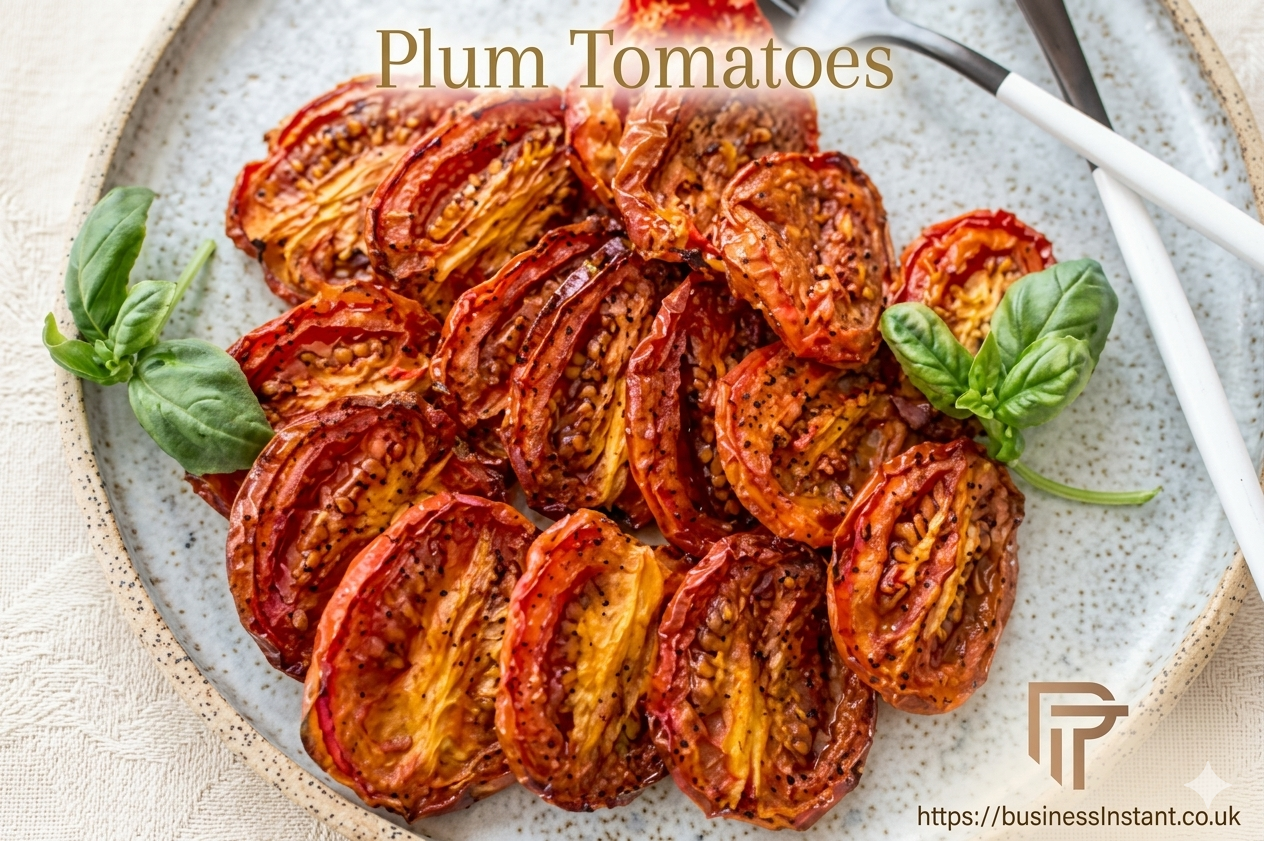
Roasting plum tomatoes with olive oil, garlic, and herbs enhances their natural sweetness and adds depth to pastas, bruschettas, and grain bowls. Sun-dried plum tomatoes, made by removing excess moisture, offer concentrated flavor for salads, pizzas, and sandwiches.
Even in fresh applications, plum tomatoes excel. Their firm flesh allows them to be diced for salsas, chopped for salads, or thinly sliced for sandwiches, all while retaining texture and providing a burst of natural sweetness. Whether raw or cooked, plum tomatoes deliver both flavor and visual appeal, enhancing the presentation and taste of countless dishes.
Nutritional Benefits
Plum tomatoes are rich in essential nutrients. They provide vitamins C and A, antioxidants such as lycopene, and dietary fiber. Lycopene, in particular, is associated with heart health, reduced inflammation, and protection against certain types of cancer.
Because plum tomatoes have lower water content than round tomatoes, they offer more concentrated flavor and nutrient density per serving. Incorporating plum tomatoes into daily meals contributes to a balanced diet and supports both culinary and health goals.
Global Culinary Significance
Plum tomatoes have a prominent role in Mediterranean cuisine, especially Italian cooking. In regions like Campania and Emilia-Romagna, they form the backbone of traditional sauces, preserving techniques, and pasta dishes. San Marzano tomatoes, in particular, are internationally recognized for their superior flavor and are protected by designation of origin laws.
Outside Europe, plum tomatoes have been embraced globally. In North America, they are a staple for making homemade sauces, canning, and roasting. In Asian cuisines, plum tomatoes are valued for stir-fries, soups, and braised dishes where firmness and concentrated flavor are essential. This worldwide adoption demonstrates their versatility and importance as a global culinary ingredient.
Modern Use and Sustainability
Today, plum tomatoes are central to sustainable cooking and responsible consumption. Their firm flesh and low water content reduce waste in cooking, and they are ideal for preserving through canning, drying, or freezing, which extends their usability and minimizes spoilage.
Chefs and home cooks alike appreciate the balance of taste, texture, and shelf life that plum tomatoes provide. They continue to be integral to home kitchens, professional restaurants, and artisanal tomato products, highlighting their enduring relevance in modern culinary practices.
Conclusion
Plum tomatoes are more than just a type of tomato; they are a culinary cornerstone. Their firm, meaty texture, intense flavor, and versatility make them essential for sauces, roasting, canning, and fresh preparations. From their origins in South America and adaptation in Europe to their modern role in global cuisine, plum tomatoes have remained a favorite among cooks for centuries.
Their unique combination of practicality, taste, and nutritional value ensures they will remain a staple ingredient in kitchens worldwide. Whether enjoyed fresh, slow-cooked, or preserved, plum tomatoes continue to transform everyday dishes into rich, flavorful experiences